
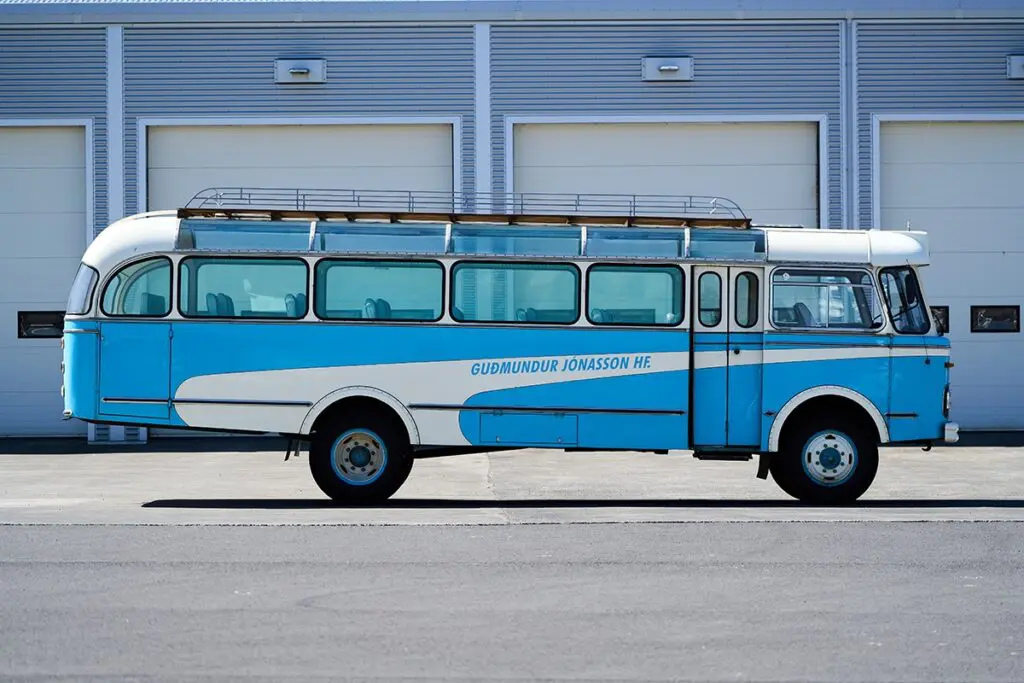
R-373: A Coach Built for Iceland
R-373 belongs to a time when travel in Iceland was still being shaped as an experience of exploration. From the beginning, it was more than just a coach. It became part of the way Iceland opened itself to both locals and visitors from around the world.
The first Mercedes-Benz coach imported to Iceland by Guðmundur Jónasson is still owned by the family that runs GJ Travel today, now in its third generation. Beginning in the 1930s, Guðmundur Jónasson took Iceland’s first travellers into the rural countryside using modified vehicles and drawing on his extensive local knowledge. These were not scheduled tours, but journeys shaped by the weather, terrain, and experience.
By the late 1950s, demand from both international and domestic travellers was growing, especially for access to the more remote interior. What was needed was a vehicle that could carry passengers safely and reliably while still reaching places that few people had seen.
R-373 was built and registered in November 1960 to meet that need.
It is a strong example of how vehicles were adapted to Icelandic conditions through practical thinking and ingenuity, making the most of the materials and resources available at the time.
The chassis was based on a Mercedes-Benz LP 322, while the body was built locally.
At the same time, Guðmundur Jónasson worked actively to establish responsible access to the Icelandic highlands. Through determination and hands-on effort, he helped create new routes, finding ways across rivers and through challenging terrain—routes that are still used today. This work was carried out with respect for nature, a clear opposition to off-road driving, and the aim of leaving the land in better condition for future generations.
Built for Use—and for People
The interior reflects both practicality and character. With 34 passenger seats—including a five-seat rear bench and a three-seat side bench at the front—the layout created a more social and flexible space than that of modern coaches. Passengers sat closer together, conversations flowed more easily, and the journey itself became part of the experience.
The seats were upholstered in Icelandic wool, a material that has proved remarkably durable over time.
Externally, the coach was designed with long-distance travel in mind. A roof rack with ladder access provided space for luggage, while an elevated rear storage compartment and large mirrors supported operation in narrow and often unpredictable conditions. Every detail served a purpose.